🏝 Attractions & Tourism

Places to Visit in Balia

From ancient temples and sacred wetlands to legendary freedom fighter memorials and one of India's grandest fairs — Balia's attractions span nature, history, spirituality, and living culture.

🌎 Explore Balia

A Destination Rich in Every Way

Balia District, situated where the plains of Uttar Pradesh meet the border of Bihar along the banks of the Ganga and Saryu, is a traveller's treasure chest. Its landscape is defined by the wide, silver braids of its great rivers, the lush green of its agricultural heartland, and the timeless rhythm of its festivals. Every season brings a different face of Balia: the golden harvest of winter wheat, the riot of colour at the great fairs, the quiet spirituality of the pre-dawn ghats, and the explosive joy of Chhath Puja. Balia's eight must-visit attractions presented here represent only the highlights — the district rewards the curious visitor with discoveries at every turn.

🐦

Wildlife & Nature

Surha Tal wetlands host 130+ bird species each season

🏛

Temples & Shrines

Dozens of ancient temples span the entire district

🎉

Fairs & Festivals

Dadri Mela draws 500,000+ visitors annually

🏭

History & Heritage

Birthplace of Mangal Pandey & 1942 rebellion

🌊

Rivers & Ghats

Sacred Saryu & Ganga confluence near Balia

🏫

Ashrams & Spirituality

Ancient Durvasa Ashram and meditation centres

Surha Tal bird sanctuary wetland lake with hundreds of migratory birds in Balia Bihar
🐦 Nature & Wildlife

Surha Tal Bird Sanctuary

✓ Ramsar Wetland Site

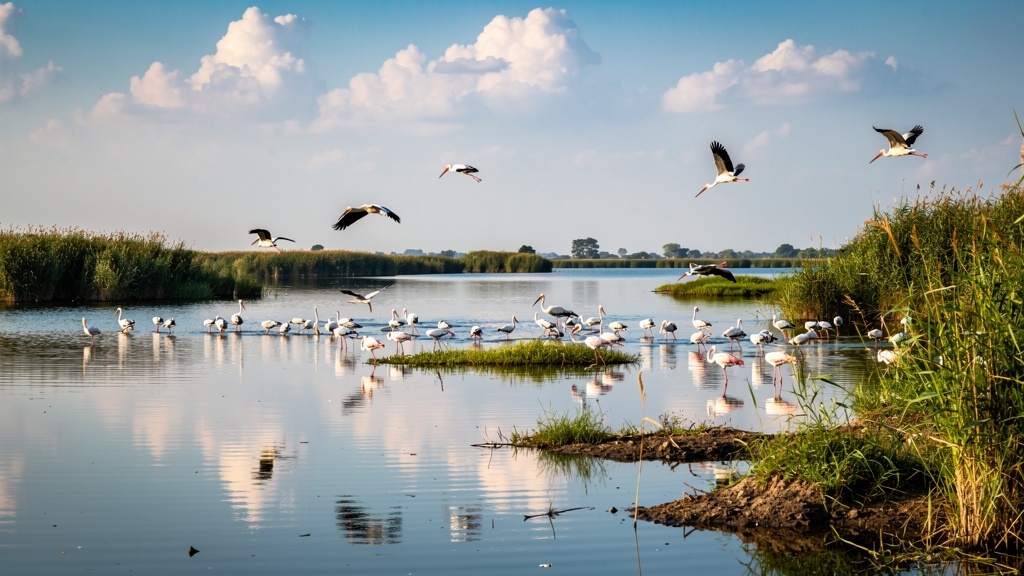
Surha Tal is without question the most ecologically magnificent attraction in all of Balia District. This vast, shallow freshwater lake covers approximately 34 square kilometres and is one of the largest and most productive wetland systems in the Indo-Gangetic plain. Declared a Wildlife Sanctuary in 1991, it is especially famous as a winter haven for migratory waterbirds that fly thousands of kilometres from their breeding grounds in Central Asia, Siberia, and the Himalayan foothills to spend the cold season here.

The avian spectacle at Surha Tal is awe-inspiring. From November through February, the lake's shallow waters, reed beds, and mudflats host an extraordinary diversity of bird life. Greater flamingos wade in long, impossibly pink lines through the shallows. Painted storks stand sentinel in the reeds. Bar-headed geese, those supreme high-altitude migrants, arrive in massive skeins. Sarus cranes — the world's tallest flying birds — stalk elegantly through the marsh vegetation. Over 130 species have been recorded here including northern pintails, common pochards, gadwall, Eurasian spoonbills, purple herons, grey herons, night herons, little egrets, and multiple species of kingfishers, rollers, and raptors.

The lake's importance extends well beyond birdwatching. It supports the livelihoods of dozens of fishing communities who have lived along its shores for generations. The kheri fish that thrives in its waters is a local delicacy and a source of income. The reed beds provide raw material for mat-weaving, a cottage industry practised in nearby villages. The wetland also serves as a critical groundwater recharge zone for the surrounding agricultural land.

  • Best visited: November to February for peak bird diversity
  • Distance from Balia city: approximately 10 km north-east
  • Facilities: basic watchtower, boat rides available seasonally
  • Guided birdwatching tours available through local eco-tourism groups
  • Early morning visits recommended for best light and bird activity
Plan Your Visit
Dadri Mela annual traditional fair at Balia Bihar with colourful stalls and crowds
🎉 Culture & Festivals

Dadri Mela — The Grand Annual Fair

🕑 Kartik Purnima (Nov)

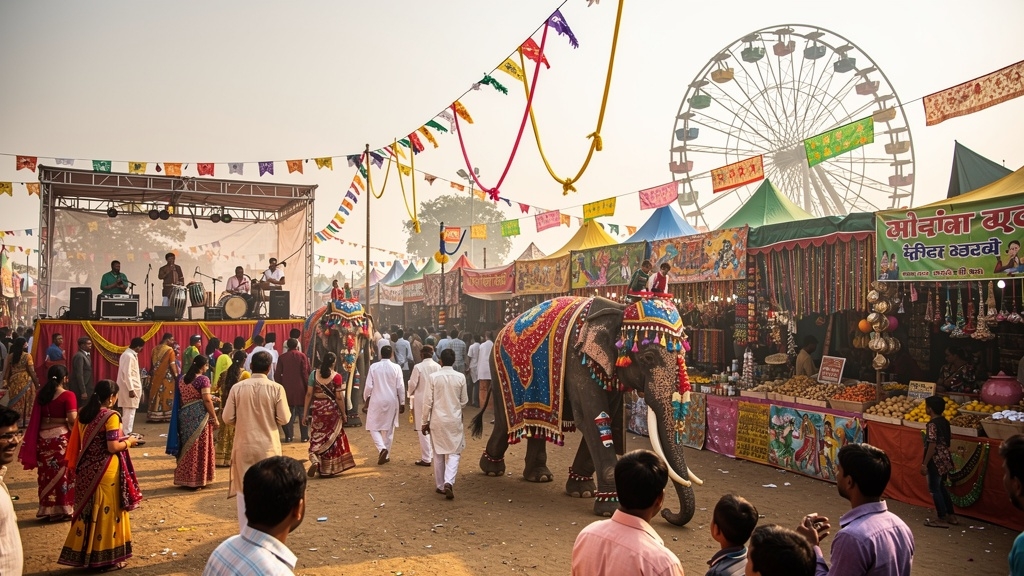
The Dadri Mela is one of the oldest, largest, and most vibrant rural fairs in all of northern India. Held every year on and around the auspicious full-moon night of Kartik Purnima on the banks of the Ganges near Gahmar, the fair has been a fixture of Balia's cultural calendar for centuries. Its origins are believed to date back to the Puranic era, when the site near the ancient Durvasa Ashram was already a gathering point for pilgrims and traders.

The scale of the Dadri Mela is staggering. At its peak, it draws between 400,000 to 600,000 visitors over several days — pilgrims, farmers, artisans, cattle traders, folk performers, and ordinary families seeking the festive atmosphere of one of India's great traditional gatherings. The fair ground stretches for kilometres along the river bank, and its colourful stalls sell everything imaginable: brass utensils, hand-woven textiles, spices, traditional sweets, agricultural implements, livestock, handicrafts, and toys.

The cattle fair component of the Dadri Mela deserves special mention. Hundreds of farmers and cattle traders arrive with bullocks, cows, horses, and even elephants, making it one of the most authentic livestock trading fairs still surviving in the Indo-Gangetic plains. The sight of decorated elephants and horses being paraded through the fair ground is a uniquely spectacular one. Folk performers — acrobats, snake charmers, puppet theatres, nautanki groups — entertain the crowds from makeshift stages throughout the day and well into the night.

  • Date: Around Kartik Purnima (typically November)
  • Location: Gahmar, on the banks of the Ganges, near Balia
  • Duration: Typically 5–7 days
  • Highlights: Cattle fair, folk performances, river bathing, handicraft stalls
  • Accommodation fills up fast — book at least 2 weeks in advance
🏭 History & Heritage

Mangal Pandey Memorial Park, Nagwa

★ Must-Visit Heritage Site

No visit to Balia is complete without a pilgrimage to Nagwa village, the ancestral home of Mangal Pandey — the sepoy whose single act of defiance on 29 March 1857 lit the torch of India's independence movement. Nagwa lies approximately 11 kilometres from Balia town centre and is easily reachable by local transport, auto-rickshaw, or private car.

The Mangal Pandey Udyan (Mangal Pandey Garden) at Nagwa is a beautifully maintained memorial park established by the Uttar Pradesh government in recognition of its native son's supreme sacrifice. The park's centrepiece is a dramatic, full-size bronze equestrian statue of Mangal Pandey, depicting him as the determined soldier-rebel he was in life — rifle in hand, eyes blazing with defiance. The statue stands on a tall plinth inscribed with the dates and narrative of the 1857 uprising.

Within the park complex, a small but thoughtfully curated museum houses period artefacts, historical documents, paintings, and interpretive panels that narrate the story of the first war of independence from Mangal Pandey's perspective. Visitors can see replicas of the period musket, the British East India Company's military uniform of the era, and documents relating to Pandey's court-martial. The museum is especially popular with school groups and is genuinely moving for any visitor with an interest in Indian history.

Adjacent to the park is the Mangal Pandey's ancestral home, parts of which have been preserved and marked with a commemorative plaque. Local residents of Nagwa village are enormously proud of their connection to this great man and are generally delighted to share stories and traditions associated with the Pandey family with respectful visitors.

  • Distance from Balia city: 11 km (approx. 20 min by auto-rickshaw)
  • Museum timings: 10 AM – 5 PM (closed Mondays)
  • Entry: Nominal fee (check current rates locally)
  • Best combined with a visit to the Balia district museum
  • Annual celebration on 29 March (Mangal Pandey Divas) with special programmes
🏭

"Mangal Pandey — the sepoy who fired the shot that echoed across an empire and started a revolution."

Nagwa Village, Balia District
Uttar Pradesh, India

🏛 Spiritual Heritage

Sital Mata Temple & Ancient Shrines of Balia

Balia's spiritual landscape is woven from dozens of ancient temples, riverside shrines, and sacred sites that draw pilgrims and devotees throughout the year. These are the most revered among them.

🏛
Hindu Temple

Sital Mata Temple

The Sital Mata Temple is one of the most venerated shrines in Balia, dedicated to Goddess Sital — the deity of coolness, mercy, and protection from disease, particularly smallpox. The temple, which sits within a large walled compound near the central market, has been a site of continuous worship for several centuries. Its annual fair during the month of Chaitra (March/April) is a lively event that draws thousands of devotees from across the district and beyond.

The deity's image is carved from ancient stone and is believed by devotees to be of enormous antiquity. The temple's architecture displays a pleasing blend of medieval North Indian temple style — with a curved shikhara (spire) — and more recent renovations. The precincts include a sacred pond (kund) where devotees take a ritual dip before offering prayers at the main shrine.

🌊
River Shrine

Triveni Sangam Ghat

The confluence of the Ganga, Saryu (Ghaghra), and the seasonal Tons river near Balia's northern boundary is considered one of the most sacred triveni sangams (triple river confluences) in the Indo-Gangetic plain. Pilgrims travel from across Bihar, eastern UP, and as far as Jharkhand to bathe at this holy meeting of waters, particularly during the auspicious Kartik month and during solar and lunar eclipses.

The ghat here is lined with small temples, dharamshalas (pilgrim rest houses), and the premises of various religious sects and akharas. Boat rides along the confluence offer an unforgettable perspective on the wide, braided rivers and the flat, fertile floodplain landscape that defines Balia's geography.

🕐
Historic Temple

Baba Bariyarpur Nath Temple

Located in Bariyarpur village within the district, this ancient Shaivite temple dedicated to Lord Shiva in the form of Bariyarpur Nath is reputed to be over 400 years old. The temple complex contains a large Shiva lingam of black stone that pilgrims believe was installed by a medieval saint. The Shravani Mela held here each July–August during the holy month of Shravan is one of the district's most attended religious events, with thousands of kanwariyas (Shiva devotees) carrying holy water from the Ganges to pour over the lingam.

🍂

Chitbaragaon Heritage Village

Land of the 1942 Rebellion Remembrance

🏭 Heritage Village

Chitbaragaon — Village of Legends

The village of Chitbaragaon holds a unique and celebrated place in the freedom struggle narrative of Balia and, by extension, of India. It was here and in surrounding hamlets that the extraordinary events of August 1942 unfolded, when ordinary farmers, teachers, merchants, and labourers collectively rose up against British rule and declared their own independent government — an astonishing act of civil courage without parallel in the colonial era.

Chitbaragaon is associated strongly with Chittu Pandey, the charismatic local Congress leader who led the 1942 movement. His memory is preserved in a local museum and by the oral traditions of the village, where elders still recount vivid stories of those ten extraordinary days of freedom. Visiting Chitbaragaon is an immersive experience in living history — the landscape of fields, ponds, and mud-walled houses has changed little since the colonial era, giving visitors a powerful sense of the rural India that resisted an empire.

The village is also notable for its fine examples of traditional Bihari madhubani-influenced wall paintings on the outer walls of older homes, and for its skilled community of potters whose clay wares — including the thekua moulds used during Chhath Puja — are sought after across the district.

  • Distance from Balia city: approximately 15 km south-west
  • Best accessed by private vehicle or hired auto-rickshaw
  • Chittu Pandey memorial open year-round
  • Annual 19 August commemoration draws large crowds
🌊 Sacred Spaces

Durvasa Ashram & Saryu River Ghats

🌊

The sacred Saryu river ghat at dawn — incense smoke rises, oil lamps float, and the ancient ritual of water offering begins anew.

🏫 Spiritual Heritage

Durvasa Ashram — Ancient Hermitage

The Durvasa Ashram is one of the most historically significant sites in Balia, associated with the legendary Vedic sage Durvasa — renowned across Hindu scriptures for his ferocious asceticism and his equally ferocious temper. According to tradition, Durvasa performed intense penance on the banks of the Ganges near present-day Balia, and the ashram that bears his name has been a centre of Vedic learning and spiritual practice for thousands of years.

The current ashram complex, situated near the Ganges bank, includes ancient meditation halls, a main temple dedicated to Durvasa and his associated deity forms, dharamshalas for visiting pilgrims and sadhus, and a well-stocked library of Sanskrit manuscripts and religious texts. The complex is maintained by a lineage of priests and scholars who continue the Vedic traditions associated with the sage. It is one of the few ashrams in the region that still regularly hosts traditional yajna (fire sacrifice) ceremonies, to which members of the public are cordially invited.

Saryu River Ghats

The string of ghats along the Saryu (Ghaghra) river within and around Balia city form the spiritual backbone of daily life in the district. Every morning, hundreds of devotees descend these stone steps for their ritual ablutions, prayers, and offerings. The ghats are particularly beautiful in the early morning, when the rising sun turns the river to liquid gold and the sound of temple bells and conch shells fills the cool air.

The most important ghats include Ram Ghat, Hanuman Ghat, and the main Chhath Puja Ghat which transforms during the festival into an ocean of humanity, lamps, and devotion. Evening aarti (lamp offering ceremony) at the main ghat, modelled on the famous Ganga aarti of Varanasi, is a spectacle of light and sound that should not be missed by any visitor.

🎉 Festivals & Events

Festivals That Define Balia

Balia's festival calendar is one of the most packed and colourful in all of northern India. Each celebration is a living expression of the district's deep spiritual roots, its Bhojpuri cultural identity, and its joyous communal spirit.

Festival Month / Season Significance Best Location
Chhath Puja (Kartik) October / November Sun worship — the most important festival of Bihar & eastern UP Saryu & Ganga ghats, all across the district
Dadri Mela Kartik Purnima (Nov) Ancient cattle and cultural fair; one of north India's largest Gahmar, on the Ganga bank
Chhath Puja (Chaiti) March / April Spring sun-worship festival; smaller but equally spiritually intense All river ghats in the district
Shravani Mela July / August (Shravan) Shiva worship; kanwariyas carry Ganga water to Shiva temples Bariyarpur Nath Temple & other Shiva shrines
Kartik Mela October / November Temple fair and river bathing celebration across the district Triveni Sangam Ghat
Sital Mata Fair Chaitra (March / April) Annual fair at Sital Mata Temple; traditional games and rituals Sital Mata Temple, Balia town
Independence Day — Balia 19 August Commemoration of Balia's 1942 self-rule; special parades and programmes Collectorate grounds, Balia city
Mangal Pandey Divas 29 March Commemoration of Mangal Pandey's defiance in 1857 Nagwa village & Mangal Pandey Park
📌 Visitor Tips

Practical Tips for Exploring Balia's Attractions

🕑 Best Time

When to Visit Each Attraction

Surha Tal is best from November to February for migratory birds. The Dadri Mela is a fixed date around Kartik Purnima (November). Mangal Pandey Park is pleasant year-round but most festive on 29 March. River ghats at dawn are magical in the cooler months (October–March). Chhath Puja is the unmissable event of October/November.

🚌 Getting Around

Local Transport Options

Auto-rickshaws are the most common mode for short distances within the city and to nearby attractions. E-rickshaws ply popular routes at very low fares. For Nagwa, Surha Tal, and Gahmar, hiring a private auto or cab is the most convenient option. Local bus services connect major towns and villages, though schedules can be irregular. Cycle rickshaws are ideal for short city hops.

📷 Photography

Photographing Balia

Always ask permission before photographing people, especially at temples and festivals. The golden hour at the river ghats (just after sunrise and before sunset) offers magical light. For Surha Tal birdwatching, bring a 400mm+ telephoto lens for best results. During Chhath Puja, the Sandhya Arghya sunset offering is the most photographically spectacular moment. Drones require special permits — check regulations locally before flying.

Plan Your Perfect Balia Itinerary

From the bird-filled shores of Surha Tal to the revolutionary soil of Nagwa — every attraction in Balia tells a story. Use our comprehensive travel guide to plan the perfect trip with accommodation, routes, and local insights.

✈ Full Travel Guide 🏠 Back to Home