✈ Travel Planning

Balia Travel Guide

Everything you need to plan a perfect trip to Balia — how to get here, where to stay, what to eat, when to visit, and how to get the most from every day you spend in this extraordinary destination.

🚌 Getting There

How to Reach Balia

Balia is well connected by rail and road to all major cities of northern India. Here is everything you need to know about getting to Balia from the most common departure points.
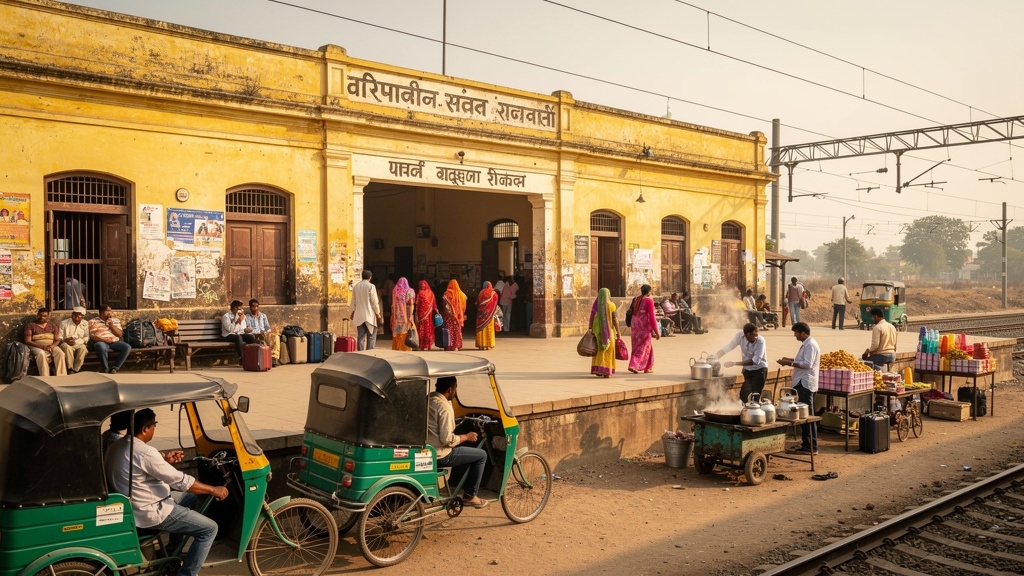
Balia Junction railway station exterior with passengers and auto-rickshaws in Bihar
🚉 By Train — Recommended

Train Travel to Balia

The train is the best and most practical way to reach Balia for most travellers. Balia Junction (station code: BTT) is the main railway station and is well connected to a wide network of trains running across northern India. The station is clean, functional, and has basic amenities including retiring rooms, a waiting hall, food stalls, and prepaid auto-rickshaw services.

From Varanasi (Kashi): Multiple daily trains connect Varanasi Junction and Manduadih station to Balia. Journey time is approximately 3 to 4 hours. Key trains include the Varanasi–Balia Express and several passenger and fast passenger services. This is the most popular route for tourists arriving at Varanasi airport.

From Patna: Patna Junction is connected to Balia via Arrah and Buxar. Journey time is approximately 4 to 5 hours by express train. The Patna–Balia Intercity Express and several mail/express trains cover this route daily.

From Lucknow: The Lucknow–Balia route takes approximately 6 to 7 hours via Ghazipur or Faizabad. There are direct services as well as change-of-train options at Varanasi.

From Delhi: The journey from Delhi (Anand Vihar, New Delhi, or Hazrat Nizamuddin) to Balia takes between 10 and 13 hours depending on the train. Options include the Poorva Express, Kalka Mail, and several other long-distance trains that stop at Balia or at Ballia Road station.

  • Book tickets on the IRCTC website (irctc.co.in) or app in advance
  • Sleeper class is comfortable; 3AC recommended for overnight journeys
  • Balia Junction has pre-paid auto-rickshaw service just outside the station
  • Porter services available at the station for assistance with luggage
🚗 By Road

Road Routes to Balia

Balia is well connected by road via National Highway 19 (NH19), the historic Grand Trunk Road corridor. Road travel is ideal for those who prefer flexibility and the scenic pleasure of driving through the eastern UP countryside.

From Varanasi: Via NH19 eastward, the distance is approximately 130 km and takes about 2.5 to 3 hours by private car under normal traffic conditions. The road passes through Ghazipur, which itself offers some sightseeing opportunities (the British-era opium factory and Lord Cornwallis' tomb).

From Patna: Via Ara and Buxar, the road distance is approximately 200 km and takes 4 to 5 hours. The Koilwar bridge over the Sone river and the town of Buxar (site of the decisive 1764 Battle of Buxar) are notable waypoints.

State Roadways Buses: UP State Road Transport Corporation (UPSRTC) and private operators run regular bus services from Varanasi, Gorakhpur, Azamgarh, Ghazipur, and other nearby towns. Buses are an economical option, though journey times are longer than trains.

Taxi & App Cabs: Outstation taxis from Varanasi to Balia are widely available. Expect to pay Rs. 2,500–3,500 one-way for a sedan. Ola and Uber may have limited availability in Balia itself, but local taxi operators are easy to find.

✈ By Air

Nearest Airports & Air Travel

Balia does not have its own civilian airport. The nearest airports are:

Lal Bahadur Shastri International Airport, Varanasi (VNS): The closest and most convenient airport, approximately 130 km west of Balia city. It is connected to Delhi, Mumbai, Kolkata, Hyderabad, Bangalore, and other major Indian cities with multiple daily flights. From the airport, take a taxi (Rs. 2,500–3,200 to Balia) or first travel to Varanasi railway station and take a train.

Gorakhpur Airport (GOP): Approximately 120 km north-west of Balia, Gorakhpur airport has recently expanded its network and now connects to Delhi, Mumbai, and Bangalore among others. This is a good option if your origin city has a Gorakhpur flight.

Patna Airport (PAT): Approximately 200 km east, Jay Prakash Narayan International Airport has the widest network of flights among the three options and handles both domestic and international traffic.

From all three airports, the train is the most cost-effective and comfortable onward mode to Balia. Pre-book your train tickets well in advance, especially during festival seasons when trains fill up weeks ahead.
🕑 When to Visit

Best Time to Visit Balia

Balia's climate follows the classic Indo-Gangetic pattern of hot summers, a wet monsoon, and a wonderfully pleasant winter. Choosing the right time to visit depends on what you want to experience.

🍎 October – March

Winter — The Best Season

This is unquestionably the peak season and the best time to visit Balia. Temperatures range from a cool 8°C at night to a comfortable 25°C during the day, making outdoor sightseeing, ghat visits, and birdwatching at Surha Tal an absolute pleasure.

October and November bring the magnificent Chhath Puja festival (exact dates vary by lunar calendar) and the Dadri Mela, both of which are transformative experiences. December and January are the best months for birdwatching at Surha Tal, with peak bird diversity and cooler temperatures that keep the birds active throughout the day. February and March bring the pleasant pre-spring warmth and the Sital Mata fair.

Packing suggestions for winter: Light woolens for evenings and mornings, comfortable cotton layers for daytime, sturdy walking shoes, sun protection, and insect repellent for river and wetland areas.

🌝 April – June

Summer — Possible but Challenging

Summers in Balia are intensely hot. Temperatures regularly exceed 40°C and can touch 45°C in the peak months of May and June. The hot, dry loo wind (a desert wind that blows in from Rajasthan) makes afternoon outdoor activities very uncomfortable and potentially dangerous for those unaccustomed to extreme heat.

If you must visit in summer, confine sightseeing to the early morning (6–9 AM) and evening (5–7 PM). Stay hydrated at all times, wear light cotton clothing and a hat, and avoid direct sun during the hottest part of the day (11 AM–4 PM). Some temples and cultural sites may have reduced visiting hours or be more sparsely visited, which can be pleasant for those who prefer quieter tourism.

Benefit of summer travel: Accommodation prices are significantly lower, the town is less crowded, and you may find a more authentic, unhurried experience of daily Balia life.

⛈ July – September

Monsoon — Scenic but Disrupted

The southwest monsoon arrives in Balia around late June or early July and brings heavy, often torrential rainfall through September. Average monthly rainfall in August — the peak month — can exceed 300 mm. The landscape transforms dramatically: the fields turn lush emerald green, the rivers swell and flood their banks, and the wetlands at Surha Tal fill to capacity.

However, the monsoon brings significant travel disruptions. River flooding can cut off roads and affect rail services. Some low-lying areas of the city and many rural roads become waterlogged or inaccessible. The Ganga and Saryu rivers can rise dangerously close to or above their banks, and riverfront areas may be off-limits for safety reasons. Surha Tal, while full of water, is not accessible in the way it is in winter.

The Shravani Mela (July–August) is the main cultural event of the monsoon season and is worth attending if you are visiting during this period. The scenes of kanwariyas (Shiva devotees in saffron attire) walking in procession with Ganges water pots balanced on decorated wooden frames is a remarkable sight.

Month Temp Range Weather Travel Conditions Key Events
January8–20°CCool, dryExcellentPeak birdwatching at Surha Tal
February12–25°CPleasantExcellentMakar Sankranti, mild weather
March18–32°CWarm springVery GoodMangal Pandey Divas (29 Mar), Chaiti Chhath
April24–38°CHotAcceptableSital Mata fair, Ram Navami
May28–43°CVery hotChallenging
June28–43°CVery hot, pre-monsoonChallenging
July26–35°CMonsoon, heavy rainDisruptedShravani Mela begins
August25–33°CPeak monsoonDisrupted19 Aug — Balia Independence Day
September25–34°CRetreating monsoonImproving
October20–33°CPost-monsoon, pleasantVery GoodNavratri, Dussehra, Chhath Puja
November13–28°CCool, idealExcellentChhath Puja, Dadri Mela
December8–22°CCool, dryExcellentBirdwatching peak season
🏠 Where to Stay

Accommodation in Balia

Balia offers a range of accommodation options from budget guesthouses to comfortable mid-range hotels. While it does not yet have five-star properties, there is enough quality accommodation to ensure a pleasant stay for most visitors.

★★ Budget

Budget Accommodation (Rs. 400–900/night)

Balia has a good selection of budget lodges and dharamshalas (pilgrim rest houses), particularly near the railway station and the main market area. These typically offer clean basic rooms with attached or shared bathrooms, ceiling fans (or AC in newer properties), and bed linen. Food is usually available from nearby dhabas and tea stalls. Budget options are entirely functional for the short-stay visitor focused on exploring the city's historical and cultural sites.

The railway station area has the densest concentration of budget hotels, making it convenient for travellers arriving by train. Dharamshalas run by temple trusts near major temples offer very basic accommodation at nominal or donation-based rates, primarily for pilgrims.

★★★ Mid-Range

Mid-Range Hotels (Rs. 900–2,500/night)

Several mid-range hotels in Balia city offer comfortable rooms with air conditioning, attached bathrooms, reliable Wi-Fi, and in-house dining facilities. The quality at this price point in Balia is generally reasonable, with clean rooms, friendly service, and often the option of requesting Bihari home-cooked meals with advance notice.

Mid-range hotels are concentrated in the central market area and along the main arterial roads leading to the railway station. It is always advisable to call ahead and confirm room availability, especially during the Chhath Puja festival season (October–November) and the Dadri Mela week, when every property in and around Balia fills up completely and often weeks in advance.

Some hotels have recently added amenities like rooftop dining with views of the town, which is particularly pleasant in the cool winter evenings. Ask specifically for rooms facing away from the street if you are a light sleeper, as Balia's market areas can be noisy late into the evening.

🏠 Homestays

Homestays & Guesthouses

A small but growing number of homestays have appeared in Balia, offering visitors the opportunity to experience genuine Bihari family life alongside their cultural explorations. Staying in a homestay in Balia can be one of the most rewarding travel experiences in the region — hosts are typically warm, generous, and eager to share their knowledge of local history and customs.

Home-cooked meals at a Balia homestay are a particular highlight: expect freshly made sattu paratha for breakfast, a hearty dal-rice-vegetable lunch, and, if you are lucky, the house speciality — a full Bihari thali with multiple vegetable dishes, fresh roti, rice, dal, chokha, pickle, and a sweet. Hosts can often arrange guided tours to local attractions and introductions to artisans, weavers, and farmers, adding depth to your visit that no hotel can match.

⚠ Important: Book Early During Festival Season

During Chhath Puja (October/November) and the Dadri Mela week, accommodation in Balia and for 30 km around fills up completely. Start booking at least 3–4 weeks in advance for these periods. For the rest of the year, same-day or next-day bookings are generally possible, though calling ahead is always advisable. Online platforms (MakeMyTrip, OYO, Booking.com) list some Balia properties, though not all local hotels are listed online.

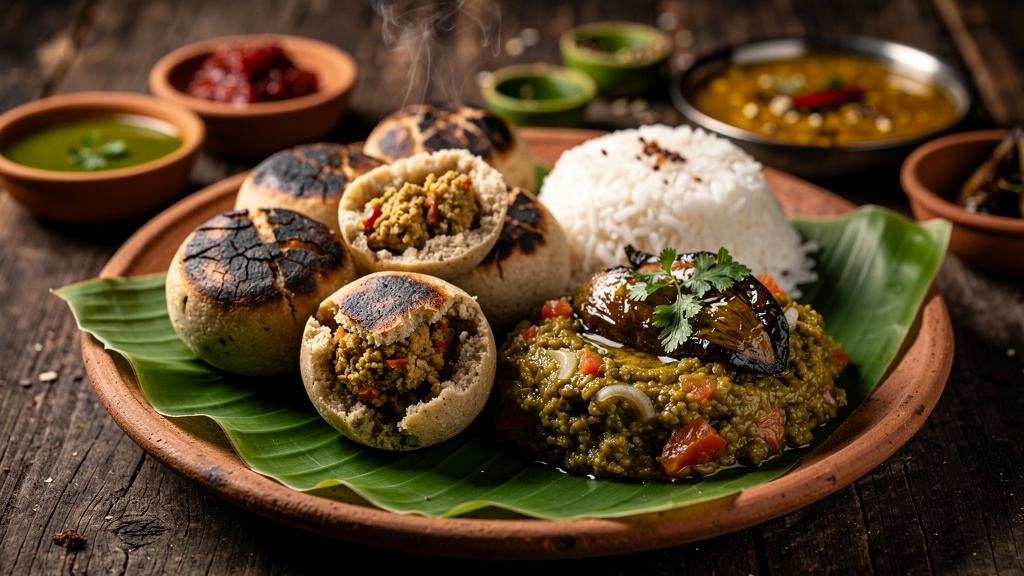
Traditional Bihari cuisine litti chokha thali with dal and rice served on banana leaf
🍕 Food & Dining

What to Eat in Balia

Eating well in Balia is one of the great pleasures of the trip. The district's food culture is rooted in the Bhojpuri tradition — hearty, wholesome, and flavoured with the warmth of its people. Food in Balia is almost entirely vegetarian by default (though non-vegetarian dhabas exist), and the use of mustard oil, asafoetida (hing), and freshly ground spices gives the cuisine a distinctive, unmistakable flavour profile.

The Litti-Chokha must be tried at least once at a traditional dhaba where it is cooked over a chulha (wood fire) or kanda (cow-dung cake fire) — the smoky flavour that results is incomparably superior to any gas-cooked imitation. Look for dhaba stalls near the railway station, the central market, and along the road to Nagwa for the most authentic preparations.

Street food in Balia is vibrant, affordable, and safe when eaten from busy, well-frequented stalls. The jalebi-fafda (crispy fried sweets) sold at morning markets, the chai brewed thick with ginger and cardamom in clay kulhads (cups), the chaat stalls with their tangy tamarind chutneys and puffed rice preparations — all are worth seeking out.

Must-Try Dishes in Balia

  • Litti-Chokha: Wheat balls stuffed with spiced sattu, baked over fire, served with smoky brinjal mash
  • Sattu Paratha: Gram-flour stuffed flatbread — the ultimate Bihari breakfast
  • Thekua: Deep-fried wheat and jaggery biscuit — the Chhath festival offering
  • Chura-Dahi: Flattened rice with thickened yoghurt and sugar — light and refreshing
  • Pittha: Steamed rice-flour dumplings with sweet or savoury fillings
  • Malpua: Sweet pan-fried pancakes in sugar syrup — perfect winter indulgence
  • Dal Puri: Crisp fried bread stuffed with spiced lentils — popular street snack
🎉 Annual Events

Balia Festival & Events Calendar

Timing your visit to coincide with one of Balia's great festivals adds an extraordinary dimension to the travel experience. Here is a complete calendar of the major annual events.

Event Hindu Calendar Date Approx. English Month Duration Type
Makar Sankranti 14 January (fixed) January 1 day Religious / River bathing
Chaiti Chhath Puja Chaitra Shashti March / April 4 days Sun worship festival
Sital Mata Mela Chaitra Navami March / April 3–5 days Temple fair
Ram Navami Chaitra Navami March / April 1–2 days Religious celebration
Shravani Mela Month of Shravan July / August Whole month Shiva worship, kanwariyas
19 August — Balia Independence Day Fixed date August 1–2 days Historical commemoration
Navratri (Sharad) Ashvin Shukla Pratipada–Navami September / October 9 days Durga worship
Dussehra (Vijayadashami) Ashvin Shukla Dashami October 1 day + Ramlila Cultural / Ramlila performances
Kartik Chhath Puja Kartik Shashti October / November 4 days Sun worship — the major festival
Dadri Mela Kartik Purnima November 5–7 days Grand cultural & cattle fair
Kartik Mela Kartik month October / November Multiple days River bathing, temple events
Mangal Pandey Divas 29 March (fixed) March 1 day Historical commemoration

★ = Highest priority events; exact dates vary annually by the lunar Hindu calendar. Always verify exact dates for the year of your visit.

📌 Itinerary Ideas

Suggested Itineraries for Balia

Whether you have a single day or a full week, here are curated itineraries that help you make the most of your time in Balia.

⏱ 1 Day

One-Day Whirlwind Tour

6:00 AM — Begin at the Saryu Ghat for sunrise prayers and the peaceful early morning ghat atmosphere. Watch locals perform puja and witness the gentle ritual of daily spiritual life along the river.

8:00 AM — Breakfast of sattu paratha or litti-chokha at a local dhaba near the market.

9:30 AM — Drive to Nagwa village (11 km) to visit the Mangal Pandey Memorial Park and museum.

12:00 PM — Lunch at a dhaba in Balia town. Try the full thali.

2:00 PM — Visit the Sital Mata Temple and the Balia district museum (if open).

4:30 PM — Evening walk through the central market — buy thekua, local spices, and gamchha cloth.

6:00 PM — Return to the river ghat for the evening aarti ceremony.

⏱ 3 Days

Three-Day Classic Balia

Day 1: Arrive, settle in, evening at Saryu Ghat. Next morning: full tour of Nagwa and the Mangal Pandey memorial complex. Afternoon: Balia central attractions, Sital Mata Temple, central market.

Day 2: Early morning departure (6 AM) to Surha Tal for birdwatching (best in winter). Spend 3–4 hours at the wetland. Afternoon: rest. Evening: explore old Balia neighbourhoods, try street food on the main bazaar.

Day 3: Morning visit to Chitbaragaon heritage village and the 1942 movement memorial. Afternoon: Durvasa Ashram and the Triveni Sangam ghat. Evening: depart for Varanasi or overnight stay for next-day departure.

⏱ 5+ Days

Five-Day Deep Dive

Days 1–2: All city attractions — Saryu Ghat, Mangal Pandey Park, Sital Mata Temple, Balia Museum, central bazaar, Durvasa Ashram.

Day 3: Full day at Surha Tal bird sanctuary — sunrise boat ride, birdwatching, interaction with local fishing communities.

Day 4: Village trails — Chitbaragaon, local potter families, weaver households, traditional farming landscapes, and the 1942 rebellion sites.

Day 5: Day trip to Ghazipur (30 km west) — the British-era opium factory, Lord Cornwallis's tomb, Ghazipur's famous rose cultivation, and the Ganga viewpoint at Talhatta Ghat. Return to Balia for evening and departure.

If your 5+ days include Chhath Puja or the Dadri Mela, restructure the itinerary to centre those dates — witnessing either of these events is the single most memorable thing you can do in Balia.

☝ Essential Tips

Essential Travel Tips for Balia

🃝 Documents & Money

Cash, Cards & Essentials

Carry adequate cash. While Balia has ATMs (SBI, PNB, Bank of Baroda, Union Bank), they can run out of cash during festival seasons. Most small shops, dhabas, auto-rickshaws, and local vendors only accept cash. UPI payments (PhonePe, Google Pay, Paytm) are increasingly accepted at market shops and some hotels, but not universally.

Keep a photocopy of your identity document (Aadhaar / Passport) with you. Some hotels request ID at check-in. The nearest full-service state bank for currency exchange or significant banking needs is in Varanasi.

🏠 Dress & Etiquette

Dress Code & Cultural Sensitivity

Balia is a conservative, traditional community. Dress modestly — cover shoulders and knees when visiting temples, ashrams, and village areas. Remove footwear before entering any temple. Women are advised to carry a dupatta (scarf) for covering the head as a gesture of respect at religious sites.

Ask permission before photographing local people, especially women and devotees at prayer. Avoid disruptive behaviour during religious ceremonies. During Chhath Puja, the ghat areas are sacred spaces — maintain silence and reverence. Plastic bags and single-use plastic are unwelcome at religious sites; carry a reusable bag.

💋 Health & Safety

Staying Healthy in Balia

Drink only bottled or filtered water — tap water is not safe for drinking. Carry a bottle from your accommodation at all times. Eat at busy, popular eateries where turnover is high and food is fresh. Avoid pre-cut fruit sold at roadside stalls.

Carry a basic first-aid kit including antidiarrhoeals, rehydration salts, antihistamines, and a mild painkiller. The district hospital (Zila Chikitsalaya) in Balia city is the main medical facility; private clinics and pharmacies are available in the central market. During summer, protect against heat stroke with adequate hydration, hats, and sunscreen. In monsoon, use insect repellent to protect against mosquito-borne diseases like dengue and malaria.

❓ FAQ

Travel Guide FAQs

Balia is generally a safe destination for travellers. Like any Indian town of its size, it is best to exercise normal urban caution — avoid deserted areas late at night, keep valuables secure, and be alert in crowded festival areas (pickpocketing can occur in dense crowds). Solo women travellers are advised to dress conservatively and have the contact details of their accommodation handy. During major festivals, police presence is significantly enhanced and the overall security situation is well managed. Locals are generally helpful and welcoming to visitors who show respect for local customs.
The primary spoken language of Balia is Bhojpuri — the mother tongue of the eastern UP and western Bihar region. Most residents also speak Hindi fluently, which is the language of business, government, schools, and markets. English is understood by educated and younger residents, particularly in hotels, larger shops, and government offices. Learning a few basic Bhojpuri or Hindi phrases — a simple "Namaste" (hello), "Dhanyavaad" (thank you), and "Khaana kahaan milega?" (where can I find food?) — will be enormously appreciated and will open many doors.
For a thorough and relaxed experience of Balia's main attractions, 3 to 4 days is the ideal duration. Two days is sufficient for a brisk tour of the city highlights. If you are visiting specifically for the Chhath Puja festival, plan for 4–5 days to fully experience all four days of the festival plus some additional sightseeing. For a combined Balia-Varanasi-Ghazipur itinerary, a week gives you a rich, deeply satisfying exploration of the eastern Uttar Pradesh cultural corridor.
Yes, Balia town has multiple ATMs from major public sector banks (SBI, PNB, Bank of Baroda) and some private banks. Internet connectivity via mobile data networks (Jio, Airtel, BSNL, Vi) is available in the city and most major towns, though rural areas may have weaker signals. Wi-Fi is available at most mid-range hotels. During festival seasons, network congestion can temporarily slow mobile internet speeds significantly. It is advisable to download offline maps (Google Maps supports offline download) and key information before arriving.

Start Planning Your Balia Adventure

Armed with everything in this guide, you are ready to experience the extraordinary depth of Balia — its history, spirituality, natural beauty, and the incomparable warmth of its people. Safe travels!

🏝 View All Attractions 🏠 Back to Home